Sigma 14mm f/1.8 DG HSM Art – Review
It is no secret; I’ve been desperate to test this lens ever since it was first announced. The problem is, reviewing Sigma lenses has become a bit of a copy and paste activity of late. There are only so many ways you can say that a lens is ground breaking and surpassing the quality of the big brand lenses from Canon and Nikon; I’ll do my best though. So, introducing the Sigma 14mm f/1.8 DG HSM Art, a ground breaking lens, surpassing the quality of the big brand lenses from Canon and Nikon! Oh, damn it…
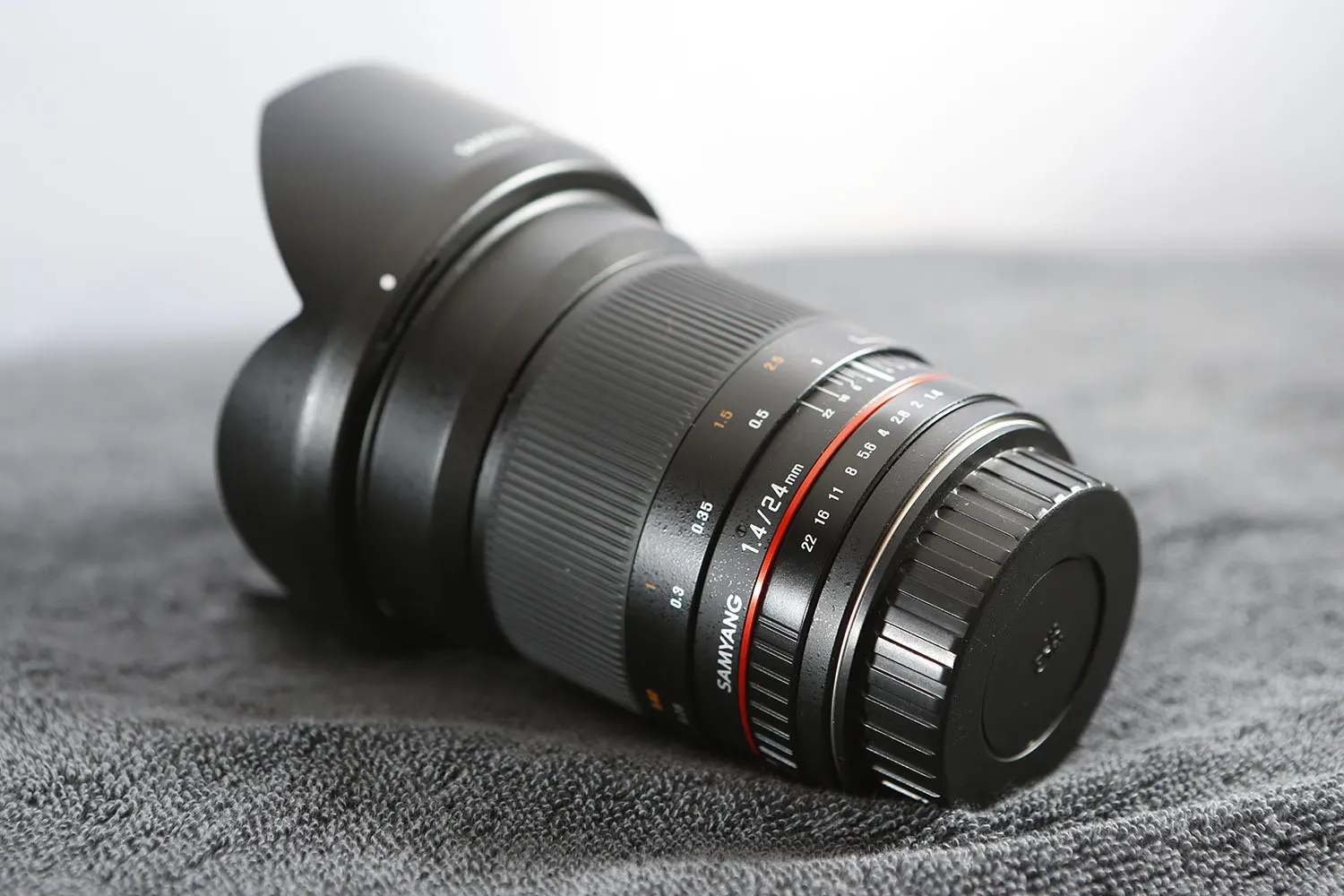
It is true though; there simply is nothing else like it on the market. There are lenses that are wider than 14mm, there are also lenses that are faster than f/1.8. What there isn’t however, is a lens that is this wide AND this fast! Sigma have found a gap in the market and literally jumped in with both feet. It is a rather specialist lens though; not exactly one that I’m going to urge everyone to go out and buy for a couple of reasons. First of all, really only astrophotographers, night landscape photographers and possibly real-estate photographers actually need a 14mm lens that opens up to f/1.8. It hardly offers the most flattering portrait shots and even opened up to f/1.8, it is not going to throw that background into a blurry mess; not unless you are literally touching your subject. Second of all, the eye-watering price places this lens in the “you have to be pretty serious to get your money’s worth out of it” category. At around £1700, it is on the high side for a relatively one trick pony when compared to the likes of the Samyang 14mm /f2.8 which can be picked up for a couple of hundred quid.
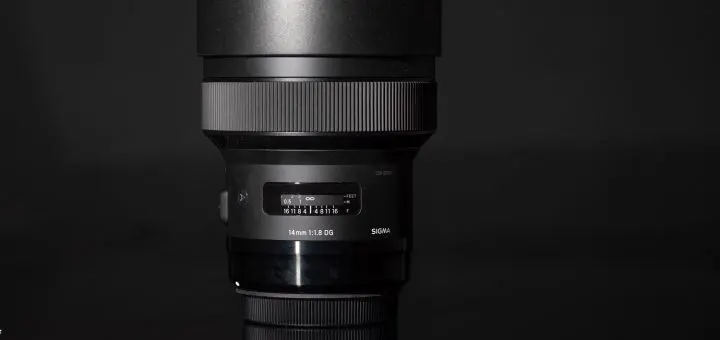
So what do you get for your money? Well, what you get is a truly MASSIVE lens! Those familiar with the small, light Samyang 14mm will be slightly taken aback by the sheer size of this thing. It features a stunning full metal construction, as has become the norm on Sigma’s line of Art lenses, and one of the most bulbous front elements I’ve ever seen. The lens measures in at 126mm long and 95mm wide and the majority of the weight is towards the front; probably caused by that huge front element. This makes the lens very front heavy. Fitting it to a heavy camera body evens the weight distribution out a little bit but not a lot. Speaking of weight, there is quite a lot of it. At around 1.2kg, it is one of the heaviest wide angle lenses I’ve come across. It is almost in the realms of needing a tripod collar as that is a lot of weight hanging off that mount. A 70-200 f/2.8 is only 100g heavier, for example. All of that weight does mean you have full weather sealing though, which is nice to know when the weather turns on you. It certainly wins top marks for build quality.
Features wise, it is hardly going to win any awards. It features auto-focus, something which other fast wide primes don’t offer, and that’s about it. The placement of the manual focus ring is a little odd, right near the front, pretty much on the lens hood. It is not a bad thing, nor a good thing. It is just, different. It is actually quite a comfortable position when manually focusing while hand holding, as you naturally want to place your hand there due to the front weighted nature of the lens. Now, there is no image stabilisation although I’d suggest that if you require image stabilisation at 14mm you need to see a doctor. Saying that, if Sigma had added image stabilisation, you would probably still need to see a doctor as your arms would have been ripped off trying to lift it. The petal lens hood is built in so can’t be removed and the lens cap is of the slide-on variety, something common in lenses with bulbous elements like this where a traditional flat lens cap would never work. Unfortunately, due to the nature of that front element there is also no filter thread. It is no real surprise though and at 14mm, even a full-frame 100mm filter system would vignette quite a bit. You can buy 150mm systems from the likes of NiSi and Lee, which will fit this lens absolutely fine but are quite expensive.
Image quality, as we’ve come to expect from the Sigma Art range, is rather lovely. Centre sharpness is fantastic for a lens of this focal length, even wide open. Colours and contrast look great too. There is quite a bit of distortion but that is understandable. 14mm is super wide and there are very few lenses out there with less distortion. Because of that distortion, there is a noticeable drop off in sharpness in the corners at wide open. Stop down and it improves, and at f/16 (the minimum aperture for this lens), its actually quite acceptable. There is still a drop in sharpness, but I’m talking about the extreme corners where you’d expect to see it on a lens this wide.
One area I was expecting to be disappointed was in Vignetting and Chromatic Aberrations. Fast lenses, especially wide ones, are always prone to bad vignetting. It is not unusual to see anywhere up to 4 or 5 stops darker corners when used wide open. The Sigma 18-35 f/1.8 Art lens we reviewed last year suffered really badly, and I was expecting far worse from the 14mm f/1.8. I was pleasantly surprised though. It is not free of vignetting; that would be completely ridiculous, but it is well controlled. At wide open, it is about 2 to 3 stops darker in the corners, which is actually mighty impressive, and a quick click in Lightroom soon gets rid of that. The overall shape and size of the lens body really do help reduce vignetting a lot. It is much the same story with Chromatic Aberrations. Wide open, there is some obvious CA, but stop down a bit and it soon vanishes. It is really not that much of a problem. I was mighty impressed with its performance.
Obviously, astro performance is where this lens should shine, as surely that is going to be its primary use. I can’t think of many occasions where you would need something that wide at f/1.8. The problem is fast Sigma lenses have not had the greatest reputation of late when it comes to handling coma; the distortion of small light sources like stars, making them look oval in shape, like flying saucers rather than stars. The Sigma 24mm f/1.4 and 20mm f/1.4 Art lenses suffer really badly from coma, and unfortunately the 14mm f/1.8 got tarnished with the same brush before anyone had even seen any sample images. However, now the lens has been released and people have started using it, we can actually see the results rather than speculate on its performance. The results though, are a bit of a mixed bag to be honest. Yes, this lens does display some coma in the corners. Whether it is a deal breaker is down to personal preference. Coma is not something that annoys me that much, and there are ways of dealing with it. I will say the 14mm is a big improvement and displays far less coma than other Sigma Art lenses, and stopping down a bit does reduce this even further. To me, simply having that f/1.8 aperture and the minimal vignetting wide open really makes this lens a wide view astrophotographers dream. Using ISOs of around 800 makes a huge difference to the overall clarity and cleanliness of the image. While cameras are ever improving and shooting at high ISOs is yielding less noise, nothing beats having the ability to keep that ISO as low as possible. It is just a shame it does suffer from coma, something which far cheaper lenses such as the Samyangs don’t seem to suffer from. Without that, it would be near enough the perfect astro lens.
The lens does have some other downsides. The huge, rounded front element flares very easily; much sooner than a more traditional, flatter front element. It’s got the usual coating to help reduce lens flare, but shoot anywhere near towards the sun and expect to see some flaring anyway. There is nothing you can do about it; you just have to bear it in mind when choosing your composition. Something else to bear in mind, as I mentioned earlier, is the minimum aperture of f/16. Although I’d never recommend regularly shooting at f/22 or f/32, not having the option could be an issue to some; controlling the light during the day is going to be a lot more difficult. With a 1 to 2 stop wider aperture fully closed, longer exposures during the day are going to require an ND filter, which we know you can’t just screw on.
Summing up this lens is very difficult, and actually recommending it is even harder. As I said at the start, it is a relatively one trick pony. I’m not saying that’s a bad thing; there are a lot of very specialist lenses out there, and if your speciality is astrophotography, it’s a thumbs up from me. For most people however, there are just not that many situations where you would actually reach for this lens and at £1700, you’re going to want to reach for it often to make it feel like a worthwhile purchase. The 14mm focal length is really dramatic, but Sigma have just released a more versatile 14-24mm f/2.8. It is cheaper, still plenty fast enough for most people and having a decent zoom range, for me, places it above the 14mm f/1.8. Another fly in this lenses ointment is the new Samyang 14mm f/2.4. While it doesn’t have quite the same max aperture and it lacks the auto-focus, it is only around £800. You have got to really want that f/1.8 aperture and autofocus to justify the price gap. If you can justify that price gap, the Sigma 14mm f/1.8 is a truly beautiful lens that you wouldn’t be disappointed in owning; its exquisite quality meets the expectations given the high price point. I can’t fault the image quality, aside from a little coma at night. This lens handles the drawbacks of wide and fast very well.
If you like wide view astrophotography, and you have the money, go for it! Its build quality is going to make it feel value for money. It is, however, a very expensive specialist lens. Thankfully for the rest of us, there are cheaper and more versatile options out there.
Leave a Reply