Sigma 150-600mm DG OS HSM Sport – Review
Picking a new lens these days can be a bit of a minefield. There are so many to choose from, it is difficult to know where to start. Different focal lengths, speeds, sizes, weights, image stabilisation… the list goes on and on. It is enough to make even the most level-headed photographer start shaking in the corner of the room.
I have been a fan of the higher end Sigma glass for some time now. They offer great value for money while keeping quality and performance at the forefront of their minds. I have previously used a borrowed Sigma 120-300 f/2.8 EX DG OS HSM with a 2x converter for some wildlife work, and aside from having the longest name in history, it was a very capable lens. It had some drawbacks; the focussing was not the fastest I had experienced and the zoom ring took a heck of a lot of rotating to reach its maximum, but I am just nit-picking. When it came to purchasing a new telephoto to replace my tired, ageing Canon lens, I headed over to Sigma to see what they had to offer. It would be primarily for birds, wildlife and sports; so focal length and good Image Stabilisation was important.
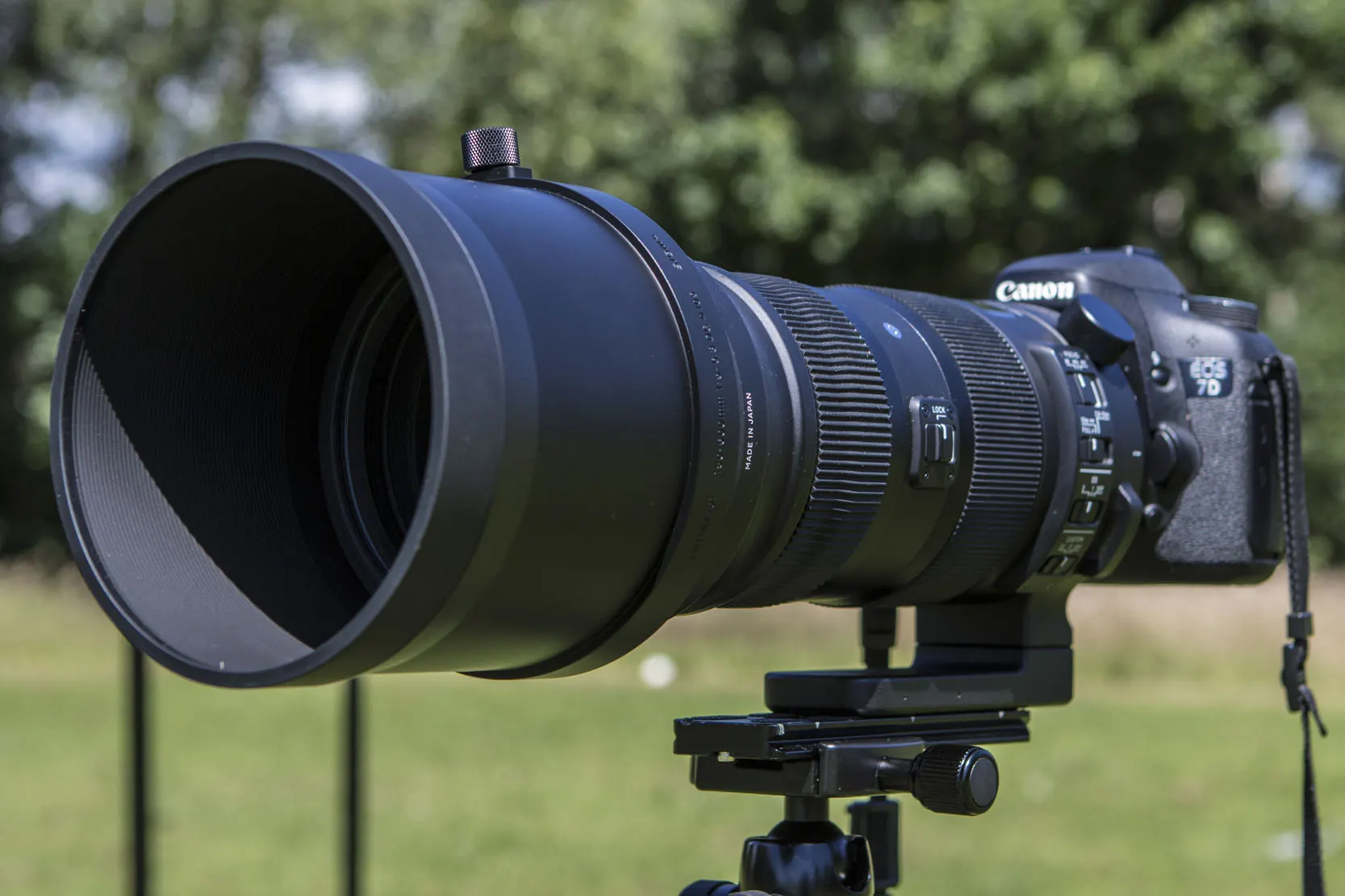
The model that won it for me was the Sigma 150-600 f/5-6.3 DG OS HSM. It comes in two different variants, Contemporary and Sport. There are subtle differences between the two, and I would strongly advise carefully studying the spec list of each to work out which suits you best. The Contemporary is slightly smaller in size and substantially lighter. The Sport is fully weather sealed and has slightly better optics with 2 FLD and 3 SLD glass elements while the Contemporary only has 1 FLD and 3 SLD glass elements. The biggest difference is price. The Contemporary averages around £739 while the Sport averages around £1299. That is quite a difference! My lenses tend to have quite a hard life so I opted for the more rugged, weather sealed option, the Sport. Naturally!
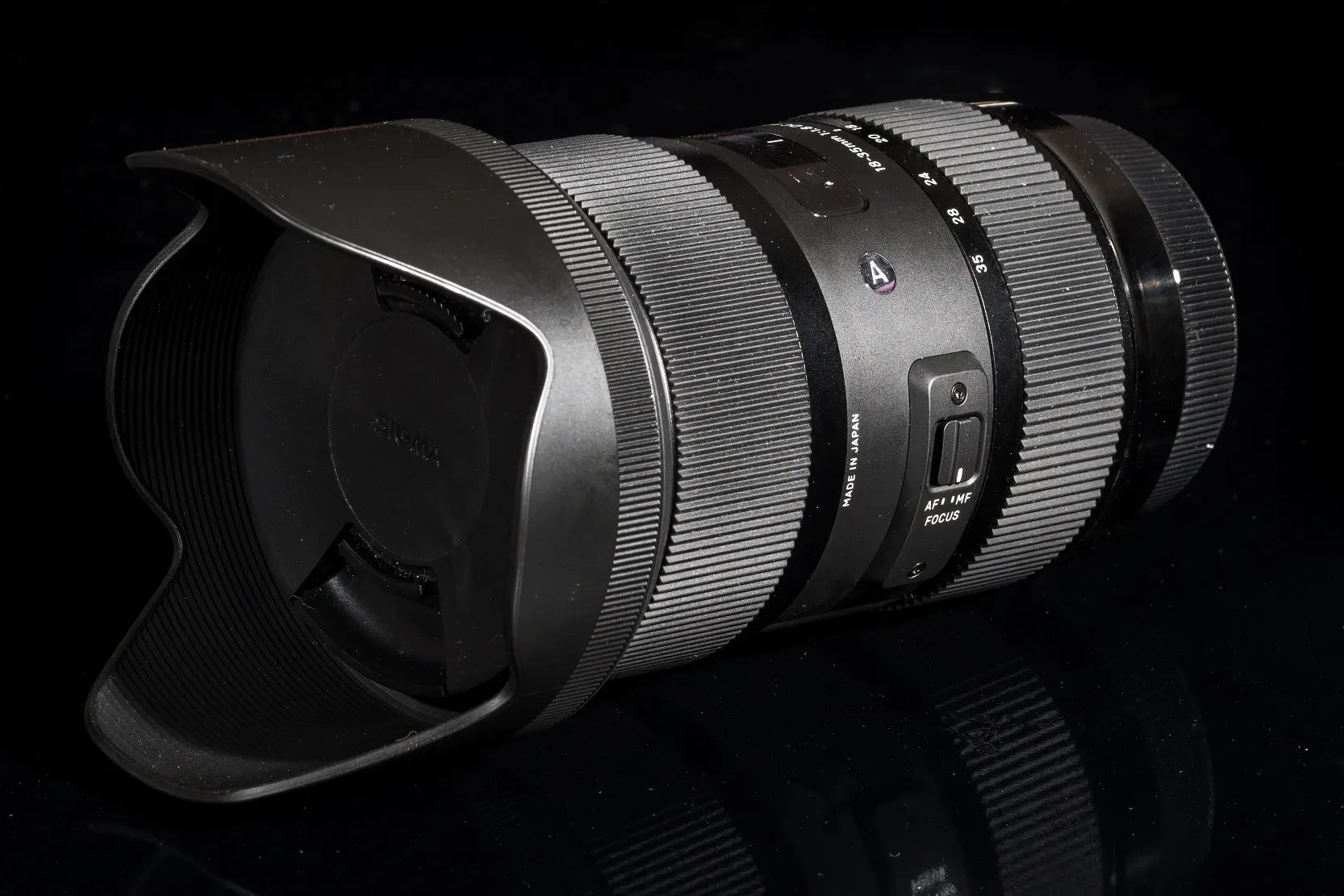
Opening the box revealed a lens case so big, it would rival some people’s camera bags. Inside the case was a lens so big, I wondered if I might have overdone it slightly. Still, no point second-guessing; let’s just get on with it. What were my first impressions? Well this thing is built like a tank and feels like it would survive being run over by one too! I am not even sure a nuclear explosion could harm it. It is genuinely one of the best put-together lenses I have come across so far; especially at this sort of price range. An all-aluminium construction, full weather sealing, a massive aluminium lens hood and big thick chunky zoom and focus rings all create that feeling of quality. All this quality comes at a price though… weight! 3.16kg to be exact. That is the equivalent of strapping 2 Canon 100-400Ls and a Canon 70-200L f/4 to your camera! You are certainly going to notice that. You can drop the weight down a little by taking the lens hood off, but it is hardly going to float away.
So, given the apparent weight issue, what sort of idiot would test it at an airshow and expect to hand hold this bad boy all day? Probably not one of my smarter moves, but it was a great test of the Image Stabilisation system, and my muscles. I have read all the reviews from people saying it is impossible to hand hold this lens and get good results. I am here to say that is rubbish…well to a degree anyway. Thankfully, it was a bright sunny day so I had the light on my side, but even when trying to get a shot of a helicopter with rotor blur at 1/60th of a second at 600mm, I got a tack sharp shot! I cannot take all the credit though; the image stabilisation system in this lens is phenomenal. There are two modes. Mode 1 is your general up/down/left/right image stabilisation, while mode 2 is specifically for panning. Due to the nature of what I was shooting, I found myself only using mode 1, even when panning. It experienced a few jumps here and there but nothing to complain about. Overall, it coped with the demands very well. Focussing was quick and precise, although focus speeds can be increased further by using the different distance limiters. You can choose to have the full focus distance (2.6m to infinity), 10m to infinity or 2.6m to 10m. Knowing I was never going to be less than 10m away from my subject, I left it on 10m to infinity. This made focussing on my subject very quick indeed.
One of the main things that sold this lens to me was the ability to push/pull zoom as well as twisting the zoom ring. I loved this feature most about my old Canon 100-400 L. Trying to lock focus on a bird or an airplane at 600mm is virtually impossible, so being able to lock on at 150 and then very quickly push the zoom out to 600mm to fill the frame is perfect. As with other super-tele lenses, you really have to rotate the zoom ring a long way to reach its end stop, and I find it a very awkward thing to do. You turn the zoom ring, turn some more; then move your hand back and do some more turning. Push/pull zoom is a pure joy to use and I am very glad Sigma have kept this feature as other manufacturers seem to be moving away from it. Even Canon has gone to a twist zoom ring on their new 100-400 L mkII.
The more I used the lens, the more neat little features I found. The tripod collar, while not removable, can be rotated. Nothing revolutionary there, but there are little detents every 90° meaning you never have to worry about getting it aligned precisely before tightening it down. The tripod collar is large, with three standard tripod threads in it, so you can achieve perfect balance with different weight camera bodies. The zoom position can be locked in place at 150mm to stop lens creep when carrying it around. Again, nothing revolutionary, but you can also lock the zoom at any of the labelled focal lengths. This saves time if you know you are only going to be taking photos at 300mm for example. So that you do not break your shiny new lens when you forget it is locked, small shocks or twisting the zoom ring will release the lock. Its little features like this that shows Sigma have put real thought into the development of this lens.
Perhaps the ‘pièce de résistance’ is the customisability of this lens. Attaching the Sigma USB Dock (available separately for around £40), a world of adjustability is opened up through the Sigma Optimisation Pro software. Firmware updates, AF Microadjustments, AF Speeds, Distance Limiters, Image Stabilisation settings and 2 custom buttons really allow you to fine tune the lens to your exact specifications. It is a fantastic feature that I have never seen before, and not as superfluous as some make out.
This lens is fantastically versatile. Where else are you going to find something that can offer 150-600mm? It is the perfect lens for something like an airshow. You do not need to wait for the aircraft to come to you to fill the frame; you can now come to the aircraft. It does not have the speed of a 60mm prime for example; but with the 150-600, you have the ability to get those wider shots as well. The quality of the images is very impressive, all throughout the focal range. As you approach 600mm, you do start to get some vignetting at wide open, although stopping down to f/8 seems to get rid of most of that. Images appear clear and sharp, despite many of the reviews suggesting otherwise. Everything kept up with me well, as I attempted to a grab a photo of a Eurofighter Typhoon screaming past me at what seemed like Mach 1. Some may disagree, but I found the weight helped especially when panning. It acted as a sort of damper, reducing any jerky movements making panning very smooth and consistent.
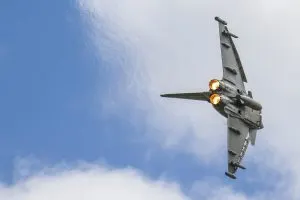
I said earlier that it was indeed possible to hand hold this lens, but to a degree. As the day wore on, my muscles started to wear out. I was starting to struggle more and more as my hit rate of getting decent shots started to decline. I still maintain that it is possible to hand hold, but I would suggest just for short periods. Even just carrying it around started to become a chore. I did find the tripod collar particularly useful when rotated 180° and used as a carry handle! It was much more comfortable than strangling myself!
So how would I rate this lens after day one? It is a fantastically well-built piece of kit, I do not think anyone can deny that; and for the price, is a great contender for the likes of other top end super-teles. General handling, features and image quality are more than enough to satisfy the most demanding of photographers. Is it the must have item for every camera bag? Well, no. Aside from the fact that it probably would not fit in most camera bags, it is a very specific lens for a very specific purpose. It does not have the everyday versatility of say, a Canon 70-200 which can be used in almost any scenario. You are not going to be taking portraits or landscapes with the Sigma 150-600. If you do a lot of sport, wildlife or bird photography and do not mind carrying it around, I think it is a great option. For the average user however, I would perhaps get the Contemporary version instead, and buy something like a Canon 70-200 f/4 with the money you’ve saved. Oh, and just in case 600mm isn’t quite enough for you, you can buy both the Contemporary and Sport lenses with an additional 1.4x converter; you know, for those moments when you need a 210-840mm zoom lens… Or a 336-1344mm on a crop sensor… Mad!!
Aperture Attic Rating
“An exceptionally well built lens, packing great performance and features into a limited budget. The weight lets it down and it loses a star. If the weather sealing isn’t a priority for you, get the Contemporary version instead. It has all the performance with none of the downsides”

Leave a Reply