Sigma 18-35mm f/1.8 Art – Review
Third party lenses always used to be a bit of a gamble. A cheaper alternative to main brand products, with a lot of the same features but built with slightly lower quality materials and optics. They were a great way for people just starting out to get a lens with a little more reach, or image stabilisation, or perhaps a slightly wider aperture. These days though, it seems the tables have somewhat turned and third party lenses are becoming the lens of choice for many due to more features, better build quality and superior optics.
Sigma, over the last few years, has really upped their game. Their new range of Art, Sport and Contemporary lenses are really pushing the boundaries, and offering features no one else can. Earlier in the year we tested the Sigma 150-600 Sport lens and it was fantastic. Exceptional build quality and a focal range very few other companies can match. It’s no wonder then, that another of Sigma’s latest offerings have got a lot of people talking.
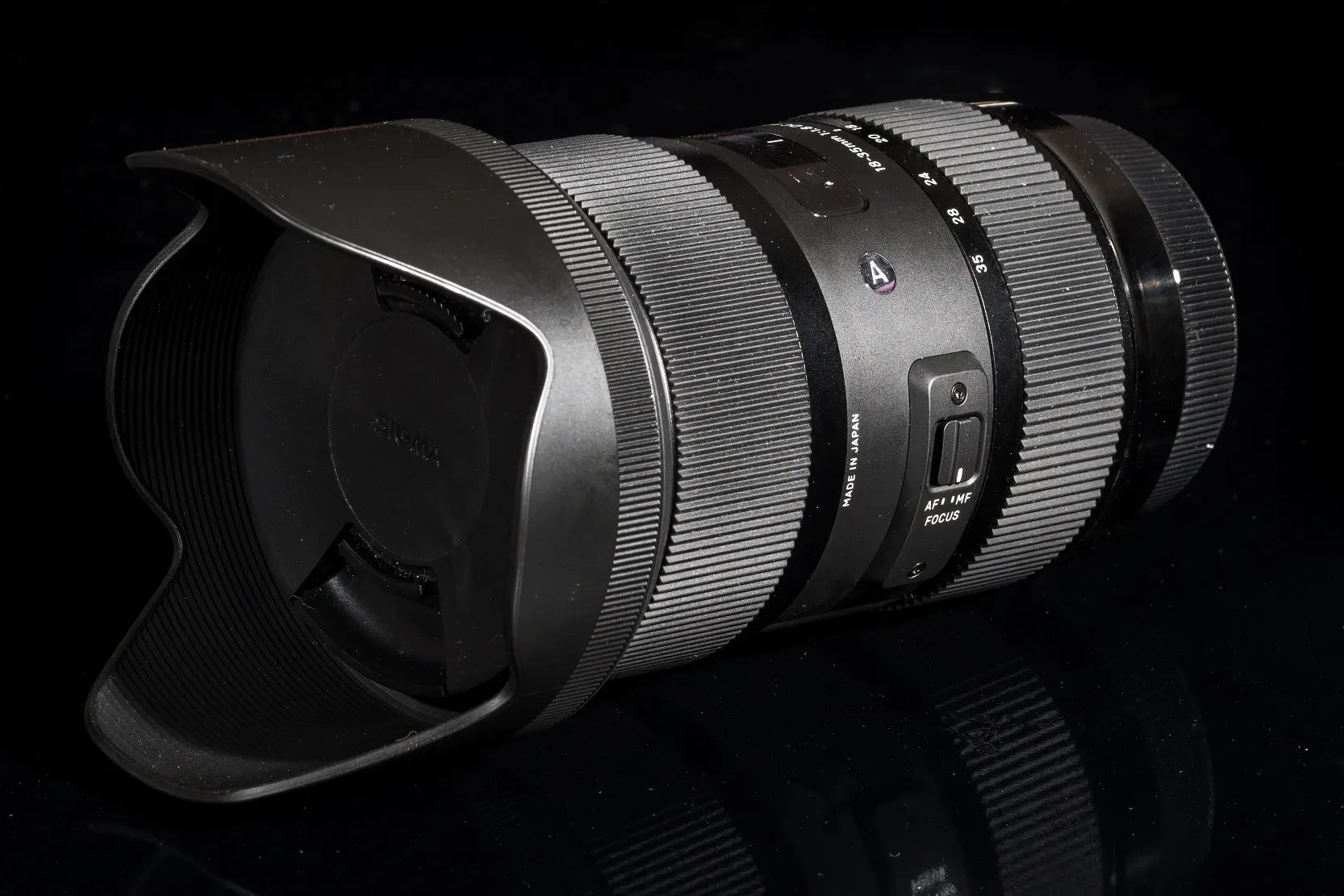
The Sigma 18-35mm f/1.8 Art lens has created quite a stir. For a start, it’s designed specifically for APS-C bodies. It’s a real treat to see someone offering such a professional grade lens for APS-C as most other lenses of this type are designed for full-frame instead. Secondly, it’s a fixed 1.8 aperture. Aside from prime lenses, that is just unheard of. No other manufacturer offers anything like this lens; it truly is a one of a kind. It does lack some things like image stabilisation, which would have been a nice addition but perhaps not absolutely essential.
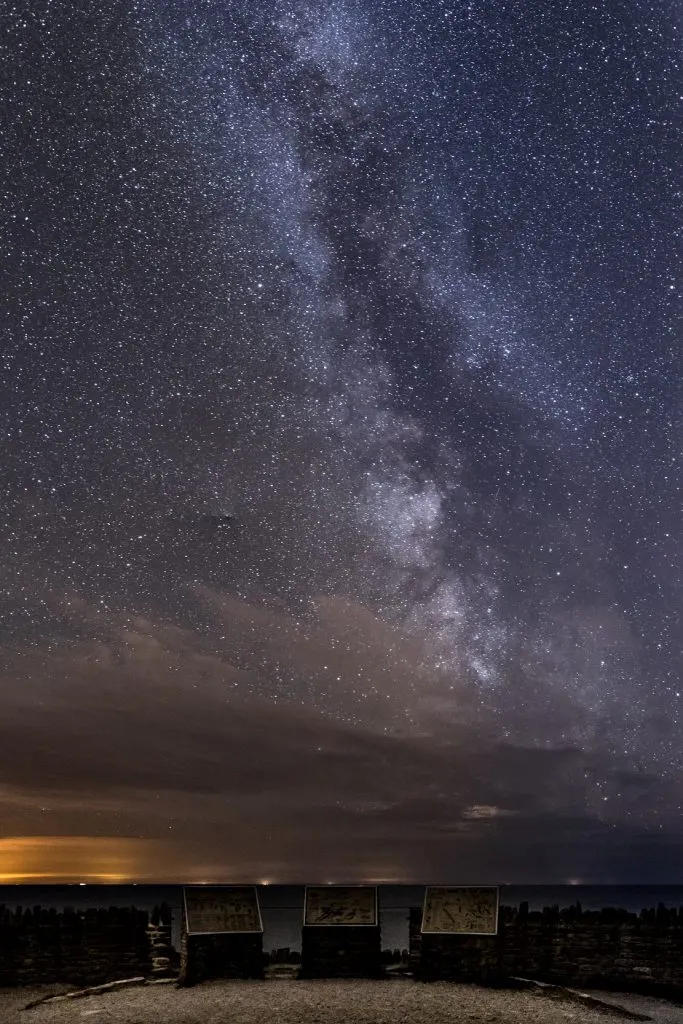
So what is this lens designed for? Well it’s a bit of a tricky one really. The focal length is kind of awkward, offering 27-52mm on Nikon’s 1.5x crop and 28-56mm on Canon’s 1.6x crop; so it’s not really a competitor to the popular 24-70mm lenses. It’s too long at the wide end and too wide at the long end. It just sits oddly between the two. The way I look at it is this lens is a bag full of f/1.8 primes smashed together into a single lens. As a street photography / walking around lens I can see the point. Why carry around a bundle of 28mm, 32mm, 40mm and 50mm prime lenses? This lens is all of these in one. The f/1.8 aperture also makes it a great low light landscape and astro lens. The problem with the smaller sensors is their noise is far worse especially at higher ISOs compared to full-frame. Being able to open the aperture up way more than most other lenses allows you to keep that ISO down, thus keeping the noise down; ideal.
Build quality, as we’ve come to expect from the latest Sigma range, is exceptional. A metal and rubber construction makes it another bomb-proof lens that will last the test of time. The zoom and focus rings are smooth but with just the right amount of resistance to turn relatively easily but not creep accidentally. It is not a light lens however; that metal construction and the abundance of glass inside all adds up, resulting in a little over 800g slung onto the front of the camera. This will cause some issues as a “walking around lens” especially on a bulky camera. Perhaps that is why it doesn’t have any kind of image stabilisation; that would have increased the weight even further. While we’re on the subject, it’s also not the smallest lens, especially for something of this kind of focal length. At 121mm, it’s longer than the old Sigma 17-50 f/2.8 OS and the Canon 17-55 f/2.8 IS; and heavier than both by a good 200g or so; and they both have image stabilisation! However, while the other 2 lenses extend as you zoom, the Sigma 18-35 has an internal zoom and focusing system, which is a nice touch. The internal focus means the front element won’t rotate as you focus, ideal for using circular polarising or graduated filters. One gripe I have is it is not weather sealed, despite the high quality build. For the kinds of things this lens is going to be used for, I’d have liked to have seen some weather sealing.
So with the touchy feely stuff out of the way, what’s more important is what this lens actually produces in terms of image quality. Being designed specifically for APS-C sensors, it makes full use of all the glass inside and provides fantastic results. That might seem a strange comment to some, but there are a lot of debates circulating at the moment about using full frame glass on APS-C bodies, and the quality / sharpness degradation that occurs. Now is not the time to get into that though; perhaps another day.
Image quality and sharpness is incredible, possibly one of the sharpest lenses I’ve used on an APS-C camera. The detail this lens captures will please even the most demanding photographer. Even at f/1.8, there is excellent sharpness across the whole frame, and doesn’t fall out at the corners like other wide aperture lenses. Stopping down a touch improves sharpness a bit but nothing substantial. This is a very sharp lens right from wide open. Sigma have really put the effort in, using very high quality optics indeed. This shows in other areas too. Distortion is kept to a minimum; there is a little barrelling at 18mm which is to be expected, but that’s virtually non-existent by 20mm onwards.
Vignetting is also very common on wide and fast lenses. Generally, at wide open most lenses will display a fair bit of vignetting, requiring you to stop down a good couple of stops to remove the worst of it. The Sigma is no different; it too shows vignetting at 18mm at f/1.8 but nowhere near as much, perhaps 1 stop at most in the very extreme corners. It’s still obvious, but acceptable and easily fixable in Lightroom. Stopping down to f/2.8 removes almost all of it, and by f/4 you’ll have completely forgotten what vignetting was. It’s much the same story with Chromatic Aberrations (CA). While the lens displays some CA at 18mm wide open, it’s mainly contained in the far corners and isn’t that obvious.

Focussing is virtually silent and pretty fast. The Hypersonic Motor does a good job of keeping focussing speeds as high as possible. I don’t know if it was just my early version of the lens, but I occasionally found autofocussing to be a little inconsistent. It would occasionally front focus, and occasionally back focus. Refocussing again seemed to correct the issue, but it became frustrating as the number of misses was higher than normal and I had to take more shots to ensure I got a sharp image. It is compatible with the new Sigma USB dock, so firmware updates can be performed, along with other calibration functions. I’d definitely suggest investing in the dock, as while it’s very sharp out of the box, it can certainly be improved. Perhaps a firmware update or some tweaks would have improved the focusing performance of my test lens.
Overall, despite the issues, I love this lens. It’s a fantastic, bullet proof landscape / walking around zoom lens with a fixed f/1.8 aperture, which is unheard of. What it offers is unlike any other and if you are an APS-C shooter, you really need one of these in your bag. It can easily replace that pile of prime lenses you can’t be bothered to carry around all day. Sigma’s new range of lenses are no longer the “cheaper option”, but instead are setting the trends and paving the way for others to follow. If I still shot APS-C, it would definitely be my go-to lens.
“I love this lens, and it pains me to just give it 4 stars, but it does have its drawbacks. It’s quite big and heavy, and yet despite the build quality, it isn’t weather sealed which I feel is a major drawback. The focal length is a little awkward and the version I used was very inconsistent with its Autofocus. It still scores a 4 for incredible build, sharpness and image quality”

Leave a Reply