
YONGNUO YN560-III & YN560-TX Flashgun and Wireless Transmitter kit – Review
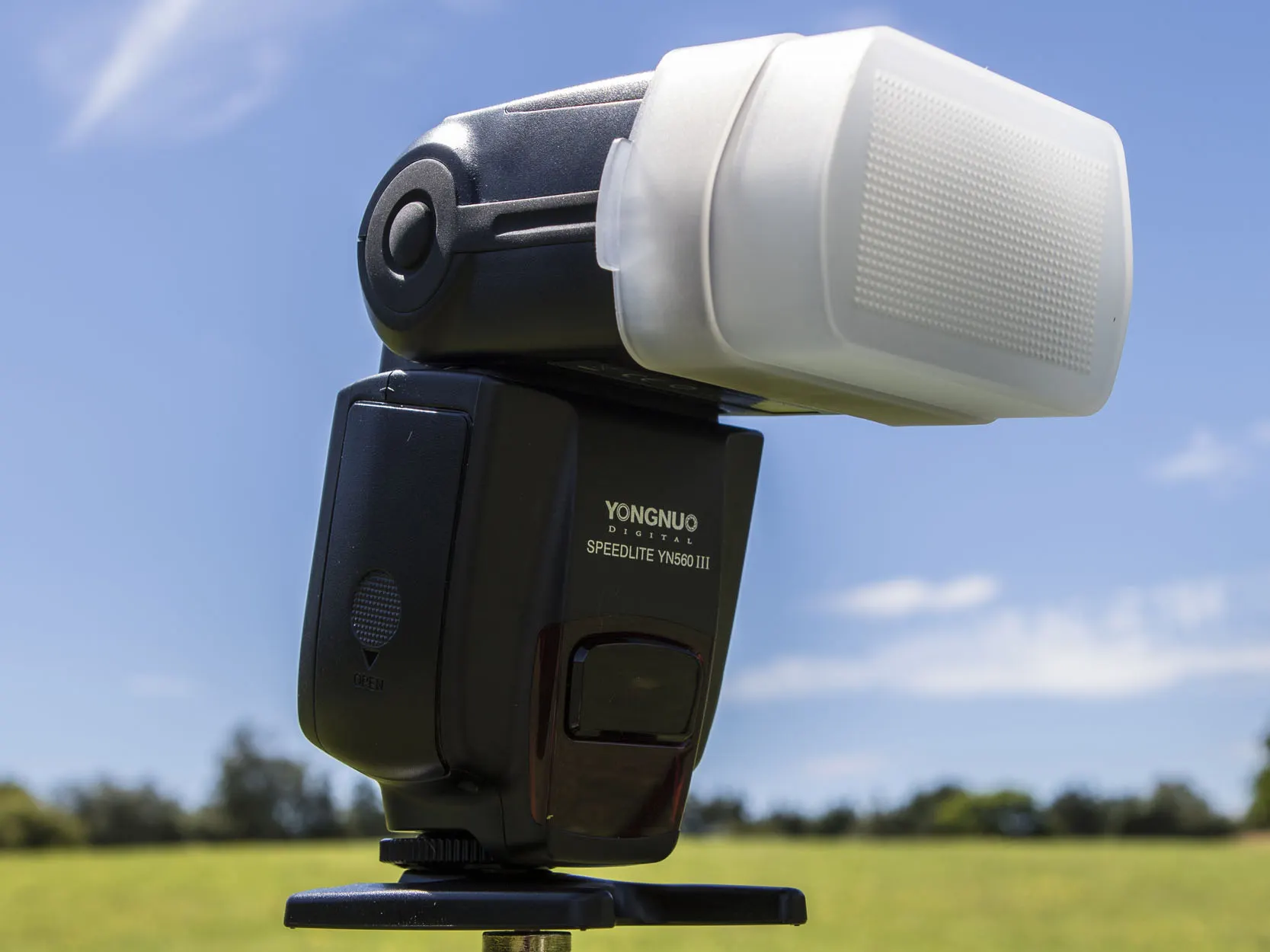
I am not going to lie, I am very particular when it comes to certain things, and Photography is definitely one of them. I will pay more for higher quality products; one of those “you get what you pay for” type mentalities. But what if it’s not entirely necessary and I’m missing out on some potential bargains? There is a whole world of other brands out there besides my beloved Canon even if I, and many others, do not want to admit it.
I have been in the market for some new flash guns for a while now. Unfortunately, my previous flash guns encountered an untimely death. It seems whenever I place them on a light stand and step away, something (or someone) decides to take them out. I can still hear the slow motion “noooooooooooooo” as they hit the floor with a resounding smash!
Without sounding like too much of a snob, Yongnuo does not strike me as a brand I am going to spend too much of my hard earned cash on, but you know what they say about assumptions? While strolling round the devil that is eBay, I came across the Yongnuo YN560-III Flash Gun and YN560-TX Wireless Transmitter. You can pick up a pair of the YN560-IIIs and the YN560-TX in a set for £119. You are going to struggle to pick up a single Canon Speedlite 430EX-III for less than £230, and by the time you have added the ST-E3-RT Transmitter, you are going to be parting ways with around £680 for a similar setup… suddenly the Yongnuo is looking bloody good value!
Price isn’t everything though, so if you’re going to attempt to pry that Canon catalogue out of my grasp, you better bring your A game with superb quality and performance. Thankfully, I am happy to report, they did!
Initial reactions as I unpackaged everything were good, the units all felt very well built with some nice quality plastics. It all felt chunky and durable. The YN560-III flash guns each come in nice padded carry case and also include a push on diffuser and a foot. My first gripe however was that while the case had a little slot to store the foot, there wasn’t enough space to store the flash with the diffuser fitted, so that is left to rattle around my camera bag. My second gripe was that the YN560-TX transmitter did not come with any kind of case at all, so it too just rattles around my camera bag with no protection. Neither are big deals but would have been nice little touches.
The overall fit and finish of the units is excellent, very similar in quality to previous Canon and Sigma guns I have used and I think I would struggle to tell the difference when blindfolded. The head rotates 180° and tilts at varying angles with strong detents to hold it at the desired position. All the battery compartments close tightly and the buttons are solid with a definitive ‘click’ when pressed. The screens are clear, precise and well laid-out with an orange backlight. There are obviously some cutbacks, although you would be mad not to expect that with something that costs around 6x less than an equivalent Canon setup. You can forget E-TTL, these flash guns are manual only! Not a big deal for me as I like to have full control over my lighting, and being able to control the flash power and zoom from the transmitter makes things super easy and you soon forget about the lack of E-TTL.
Now, I am a man so obviously I do not read the user manuals and instead dive straight in. However if, unlike me you prefer to digest the manuals carefully from cover to cover before picking up your new toy, you may be slightly frustrated. As with many of the cheaper Chinese products, the language in the manuals can, at times, be a little broken. It appears to have been translated from Chinese to English literally word for word. Many sentences are scrambled and deciphering what is meant can be difficult. This certainly slows down the setting up of the flash guns and wireless transmitter, getting them to talk to each other properly.
Initial setup was more difficult than I had anticipated, and with very little guidance from the user manuals, I was left to my own devices to get everything to work. Pressing the ‘Wifi’ button a few times got me to a setting where I could at least get the flash guns to go off with a signal from the transmitter, but could still not alter the power and zoom settings. Thankfully, I came across a very informative YouTube video (link can be found at the bottom of the page), which ran through the steps required to get everything to talk to each other properly. Without that, I definitely think I would have struggled.
That leads me nicely onto my next criticism, the layout of the buttons. All of the buttons on both the flash gun and the wireless transmitter do multiple jobs depending on how long you press them for or by pressing a multiple of buttons. I can see what they were trying to achieve; a simpler look without machine-gunning the devices with 10,000 buttons, but it can become a little confusing. Pressing the Zoom/CH and Hz/FN buttons on the transmitter together causes the transmitter to display ACT and the flash guns to go crazy. It seems pressing the centre Select button then syncs the flash guns to the transmitter and away you go. It would have been nice if it said that anywhere though? Once you are used to what the buttons do, it is not too bad, but it does take some time and perseverance.
Once you have mastered the syncing of the flash guns and transmitters however, things improve radically. The flash guns can be added to any of the 6 groups available on the wireless transmitter, meaning you can have both flashes in the same group (changing the settings of that group changes both flashes) or into different groups (change each flash individually). As you progress, you can buy more YN560-III or IV flash guns and add them to the groups. Adjusting the power and zoom settings from the camera is a joy to do making it incredibly easy to dial in the perfect light, and not needing to run to the flash gun for each adjustment is a relief. The group function is a great feature and saves a lot of time especially when you have up to six flashes to control. The power settings are selectable in increments from 1/128 to 1/1, and zoom from 24mm to 105mm. The light is bright and crisp, but can be softened with included diffuser. The power and recycle times are excellent, with full power only taking around 3 seconds to fully recycle. A reasonably loud “Beep” can be enabled to let you know when the unit is fully recycled; handy if the flash guns are some distance away. Recycle times do increase as the batteries degrade but this is common of most flash guns I’ve used. There is a power plug on the side, coincidently the same shape as on the Canon Speedlites, so you can also use an external power pack to extend the life and save those AA batteries.
The signal from the wireless transmitter is perfect; 2.4 GHz giving a range of 100m, which is ample for most people and with 15 channels to choose from, you are not going to be affected by other transmitters in the area. So far, I have not experienced any premature or rogue firing, which is a very common trait with many of the cheaper wireless transmitters. The transmitter is quite a big bit of kit, so attaching it to the hot shoe does take up a lot more space compared to the Canon ST-E3-RT, although the bigger size allows for a bigger screen also. Do not get me wrong; it is not huge and unwieldy and is certainly smaller than a Pocket Wizard! Thankfully, it is nice and light so does not add any additional weight to the camera.
The quality of light and overall versatility matches anything else I have used in the past. Yes, they are not E-TTL and that is not for everyone, but for someone willing to commit the time to learning the light conditions, taking a few test shots and tweaking the settings, you can get some truly fantastic results with minimal effort and spend. For £119, they have certainly succeeded in making me think twice about the more expensive branded items, to the extent that I will be buying some additional YN560-IV flash guns to compliment the setup.
I was ready to dismiss this kit, making a judgment to overlook it because of the name, because of the price. I wanted to slate its poor build quality and stand by my mantra of “you get what you pay for”. I assumed that something costing 6x less could be no match for my nearest and dearest Canon…
…Well, you know what they say about assumptions!
Aperture Attic Rating:
“For the money, you really can’t go wrong. It packs more than good enough performance for the average / above average user, looking to start out in the world of off-camera flash. It loses one star for the awful instructions and complicated buttons.”
Leave a Reply