JPG vs RAW – What’s best?
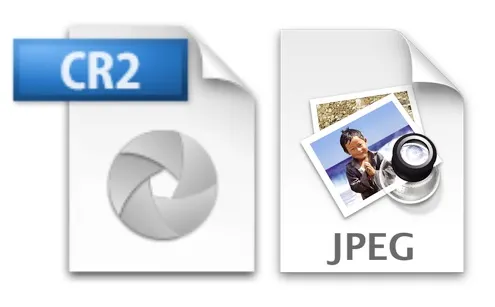
One question I hear quite a lot is “should I be taking photos in JPG or RAW?” It is quite a debate, with some convincing (and some less convincing) arguments for and against shooting in RAW. To a lot of people, especially those just starting out, the concept of shooting RAW can be scary or just plain unknown. For me, there is a time and a place for each, which I will try my best to summarise; although to be honest I hardly ever take photos in JPG anymore and I will explain why.
So before we get into the “why”, let us first look at the “what”. What exactly are JPGs and RAWs?
JPG or JPEG:
A JPG is an image that has been processed, there and then, within the camera. It is an image based on the exposure, white balance, picture style and other settings you have selected; then processed with added brightness, contrast, sharpening and noise reduction. The resulting image is then flattened, compressed, and saved as a JPG. The compression removes elements of the information in the image that are either not required or cannot be perceived by the human eye, resulting in a much smaller file size.
These JPGs are ready to go right out of the camera, whether that is uploading to the internet, displaying on a slide reel or printing out.
Post-processing can be performed, but is not necessarily required. One thing worth considering is a JPG is a “loss” file. Because of the compression, much of the original information in the image is removed and cannot be recovered. An area that is too light or too dark will not contain enough information to bring that detail back. RAW files generally handle post-processing better than JPG.
RAW:
A RAW file is pretty much the opposite of a JPG file. RAW files are completely unprocessed and uncompressed, containing all the detail originally available to the camera. Exposure, white balance, sharpening and noise reduction are all untouched by the camera, allowing the user full control over the final image. Because of this, RAW files will initially look very flat, with minimal depth and contrast and it is down to you to add as much as you wish.
Opening a RAW file needs different software to opening a JPG, but there are plenty of options available ranging from free to a couple of hundred pounds. The staples, and personal preference to many, are Photoshop and Lightroom. Photoshop and Lightroom can be purchased from Abode as part of the Creative Cloud program, with the Photography package (containing both Photoshop AND Lightroom) for just over £8 a month.
Within these pieces of software, all the data originally available to the camera is present and adjustable, to get the image exactly how you want it. White balance, exposure, contrast, whites, blacks, individual colours, sharpening and noise reduction are all able to be tweaked. That information in the shadows and highlights, that would be lost in the JPG, is still there; resulting in more of an ability to bring back the detail.
You also cannot mess up or ruin a RAW file. Obviously, you can make extreme alterations and make the image look hideous, but all those alterations are held in separate XMP files and can always be changed or reverted back to default. That information is always available. Altering and saving a JPG is very “final”, the information you have removed can never be recovered again.
So how do you choose whether to shoot JPG or RAW?
The way I look at it, and others will be different I am sure, is down to what I am planning on doing with the images. If I am just taking some holiday or family snap shots with little to no post-processing, I will shoot in JPG; I can instantly share these images with my friends and family without going through 1,000 images in Lightroom and tweaking them.
If I am taking photos for my portfolio or blog posts; be it sports, wildlife, still life or landscape, and I want them to look the best they can, I will always shoot in RAW. Having all the information available means I can pump the photos up, achieving perfect exposure, shadows and highlights. Really, any photo I actually care about, I will shoot in RAW.
Strangely, there are a lot of myths and arguments around why you should always, always shoot JPG instead, and I’ve never really understood why. Certain people seem to have some kind of massive phobia over the concept of RAW. These are generally pretty weak arguments with no solid reasoning to back it up!
Some say it is quicker and easier to shoot in JPG, and while when talking about post-processing this holds some truth; when it comes to actually taking the photo, it’s really not the case. As I mentioned earlier, the JPG is a loss file, which means you have to get everything correct in the camera first. You cannot easily adjust your white balance if you get it wrong like you can with RAW. You cannot take out contrast or sharpening if you have got the wrong picture style set. You really have to carefully consider all these elements before you take the photo. You cannot take a landscape photo, then instantly turn around and take a portrait, without changing an abundance of settings. The white balance, contrast, saturation and sharpness required for one shot may not be the same required for the next shot.
Some people use storage space as a deciding factor to shoot in JPG, due to their smaller file size. In really, in this day and age, storage is cheap. A 32GB Card no longer costs the earth, and can easily fit over 1000 20MP RAW files. Obviously, if you are shooting on a 50MP 5DSr or something, the number of photos will be less, but who honestly only carries one card? I normally carry around at least four 16-32GB cards at any time.
Strangely, the most common argument I’ve heard against RAW is that shooting in JPG is more pure, and in keeping with the days of film. I mean, seriously? What absolute codswallop! The only people who would say something that ridiculous are those who have never shot and exposed film prints in the first place! If you’re talking about your basic Kodak 1-hour disposable camera, then yeah sure, JPGs are just like that… but if you are talking about proper film photography, you really need to spend some time in a dark room with an enlarger and all the tools available. Exposure, contrast, highlights, shadows, colour corrections, even sharpness can all be altered in the darkroom, just like you can with a RAW file. Surely, if anything, shooting RAW is more in keeping with the days of film?
I am not going to sit here and beat you with a stick until you switch your camera to RAW; it is really something you need to decide for yourself. One thing I will say though, is if you are taking photos you care about in JPG because it is quicker, less stressful and you simply cannot be bothered to post-process the RAW file, perhaps photography is not the hobby for you? Post-processing should be as joyous a task as taking the image in the first place.
If you are shooting in JPG because you are put off by all the sliders in Lightroom, or you do not know what they all do, there are some fantastic guides on the internet, walking you through step by step. The next time you go out, try switching to RAW + JPG, and have a play with those RAW files. If you mess it up, you can always revert back to the defaults and start again. You will really be surprised how much better you can make the image.
Your camera has the ability to capture a lot of detail, why not give it the chance to do so?
Leave a Reply